
15 Excel Data Cleaning Hacks: Excel learning resource
15 Excel Data Cleaning Hacks
Extracted from saved YouTube search results - titled "15 Data Cleaning Hacks", filed under Data Cleaning. It's a video from Computer Tech Academy — use it to practice Remove duplicates and blanks and Trim and clean text.
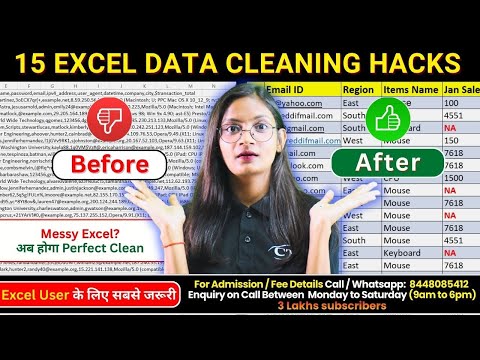
What to practice while watching
- Remove duplicates and blanks
- Trim and clean text
- Split and combine columns
- Data validation
Recommended learning path
Start by watching the lesson once without pausing, then reopen Excel and rebuild the example with your own small dataset. Save one clean practice workbook before moving to the next topic.
Source details
- Channel: Computer Tech Academy
- Format: video
- Level: Intermediate
- Topic: Data Cleaning
- Listing source: saved YouTube search capture, filed by topic
Go deeper with this skill
Turn messy imported data into a reliable table that formulas, pivots, and reports can use safely. For this article, the goal is to practice: Extracted from saved YouTube search results - titled "15 Data Cleaning Hacks", filed under Data Cleaning. It's a video from Computer Tech Academy — use it to practice Remove duplicates and blanks and Trim and clean text.
Practice workbook setup
Copy messy sample data to a raw-data sheet and keep the original untouched while you clean a separate working copy.
Practice workflow
- Identify the expected columns and data types before changing anything.
- Remove obvious blanks and duplicates, then check whether any removals need business approval.
- Standardize spacing, casing, dates, and number formats.
- Create a small before-and-after table so the cleanup can be reviewed.
Quality checks
- The row count before and after cleanup is explainable.
- Key columns have no unexpected blanks.
- Dates, IDs, and amounts are stored as the correct data type.
Common mistakes
- Cleaning directly over the only copy of the data.
- Removing duplicates without deciding which columns define a duplicate.
- Fixing visible rows while hidden filtered rows stay messy.
Next actions
- Convert the cleaned range into an Excel Table.
- Repeat the same cleanup with Power Query if the data will arrive again.
Formula focus: even if this workflow is not formula-heavy, add one check cell that confirms the final output still matches the source data.


