

Create better dropdown lists in Excel
Watch alongside this article
Public YouTube resources matched to this article's topic, functions, and practice goal.

Create SMART Drop Down Lists in Excel (with Data Validation)
Leila Gharani
Open on YouTube (opens in a new tab)
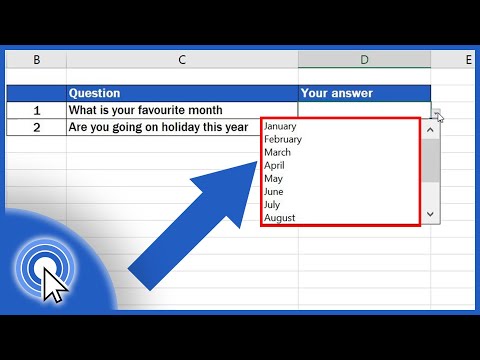
How to Create a Drop-Down List in Excel
Excel Tutorials by EasyClick Academy
Open on YouTube (opens in a new tab)Dropdowns are one of the simplest ways to improve a shared workbook. They keep inputs consistent, which makes formulas, filters, and pivot tables more reliable.
Put list values in one place
Create a sheet named Lists and store allowed values there. Examples:
- Departments
- Regions
- Status values
- Product categories
- Sales channels
This is easier to maintain than typing list values directly into each validation rule.
Use clear status values
Avoid lists with overlapping choices like Done, Complete, and Finished.
Pick one. If people type three versions of the same idea, your reports will
split them into three different categories.
Add an input message
Use the input message to explain what the user should select. A short prompt can prevent many later cleanup steps.
Review dropdowns over time
Lists change. Add a monthly or quarterly check so old products, inactive staff, or renamed departments do not stay in the workbook forever.
Go deeper with this skill
Control data entry so reports and formulas do not break because of inconsistent labels. For this article, the goal is to practice: Use data validation dropdowns to reduce typing mistakes and keep spreadsheets easier to summarize.
Practice workbook setup
Create a small lookup sheet with allowed values, then use a separate sheet for data entry.
Practice workflow
- Build the allowed list before adding validation to the input cells.
- Apply validation to the entire input column or table field.
- Add an input message that tells users what to choose.
- Test invalid entries, pasted values, and blank cells.
Quality checks
- The allowed list has no duplicates or accidental spaces.
- Validation covers future rows, not only the current sample.
- Error alerts explain how to fix the entry.
Common mistakes
- Typing allowed values directly into the validation box when a maintained list would be safer.
- Forgetting that pasted data can bypass some expected behavior.
- Using dropdowns where free text or a lookup table would be more flexible.
Next actions
- Add a helper check that counts invalid or blank entries.
- Use the dropdown field in a PivotTable or SUMIFS summary.
Formula focus: even if this workflow is not formula-heavy, add one check cell that confirms the final output still matches the source data.


